
Steel Giants in the North Atlantic Gale
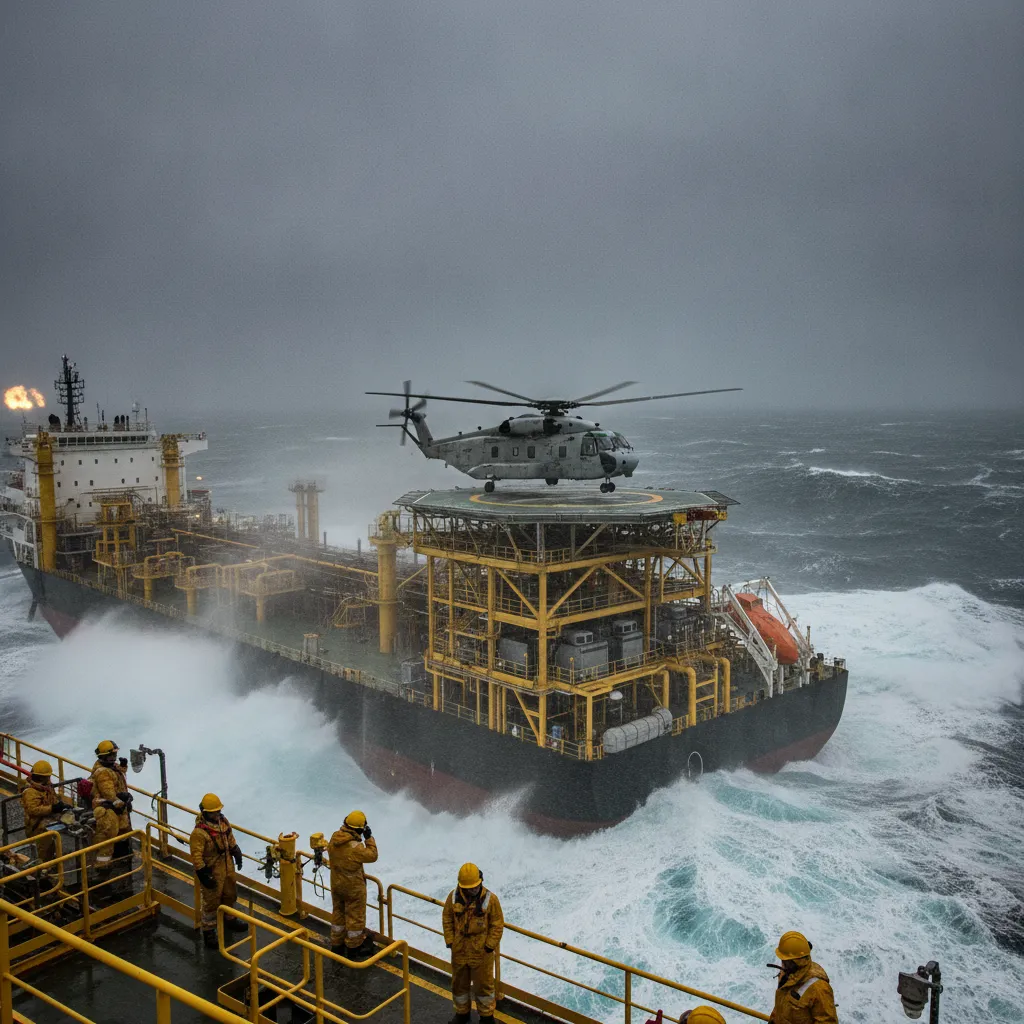
Landing by helicopter at the Rosebank oil field feels less like arriving at a workplace and more like touching down on a remote outpost at the edge of the world. Situated eighty miles northwest of Shetland, the site consists of the Petrojarl Rosebank, a massive floating production vessel that rolls gently on the North Atlantic swell. For those onboard, it is a place of high stakes and higher wages, where crews endure grueling rotations to maintain a complex web of yellow steel and piping in some of the harshest maritime environments on earth.
Life aboard the vessel is defined by a stark contrast between external chaos and internal luxury. While technicians describe thirty meter waves crashing against the hull during winter storms, the interior offers sanctuary in the form of private cabins, saunas, gyms, and a cinema. The culinary experience is surprisingly gourmet, with staff enjoying everything from braised ox cheek to midnight desserts of fillet steak and chocolate brownies. For workers like Nicola Boyd and Douglas Hogge, the job provides not just financial security but a sense of purpose that could sustain their careers until retirement if production ever receives final approval.
However, this industrial marvel exists within a fierce political vacuum. As Energy Secretary Miatta Fahnbulleh weighs the fate of the project, Rosebank has become a lightning rod for a national debate over climate change and economic strategy. With estimated reserves reaching up to five hundred million barrels, proponents argue it would provide essential tax revenue for the Treasury and bolster energy security. Opponents, led by groups like Uplift, contend that approving such a massive fossil fuel project is an ecological disaster that undermines Britain’s commitment to renewable energy.
The tension remains palpable as the ship rotates slowly around its central turret, facing into the wind while awaiting a government decision. Environmentalists warn that investing in new oil fields creates false confidence and ignores the global transition toward greener power. Meanwhile, for those living on the deck of the Petrojarl Rosebank, the argument isn’t about abstract policy or carbon targets; it is about whether their home in these wild waters will eventually fulfill its purpose or remain a silent monument to an era of energy in decline.
For information only — not investment advice.



Explainers like this, every Sunday
One calm email with the week’s money news and a small step to take.